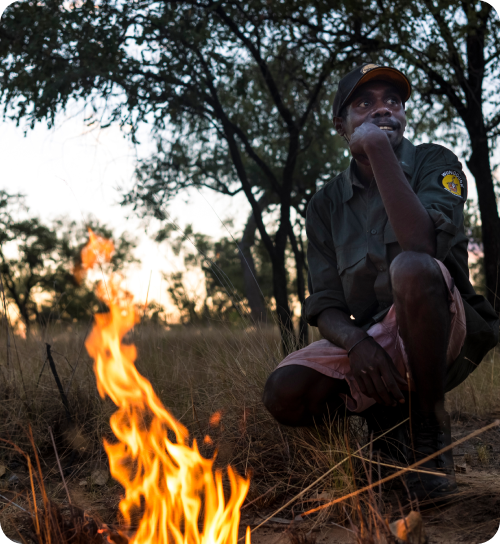
Reducing Emissions Through Fire Management
Traditional fire management practices reduce greenhouse gas emissions while maintaining healthier landscapes and ecosystems.

Emissions Reduction
Early dry-season burning produces significantly lower greenhouse gas emissions compared to uncontrolled late dry-season fires.

Verified Carbon Credits
Projects generate Australian Carbon Credit Units (ACCUs), providing verified and measurable emissions reductions.

Reduced Fire Intensity
Strategic burning reduces large, destructive fires and lowers overall fire coverage across the landscape.

Fire Coverage Reduction
Managed burning programs significantly reduce the overall area impacted by uncontrolled fires.

Improved Landscape Resilience
Healthy fire regimes strengthen ecosystems and reduce climate-related risks.

Long-Term Climate Action
Carbon projects create ongoing climate benefits through consistent land management.
Ancient Knowledge, Modern Impact
First Nations people have used fire to manage landscapes for tens of thousands of years. Today, these practices are combined with modern science to protect Country and climate.
Protecting Ecosystems & Cultural Landscapes
Strategic fire management protects wildlife habitats, preserves biodiversity, and safeguards important cultural sites across Country.

Habitat Protection
Fire-sensitive vegetation and important habitats are preserved.

Species Conservation
Critical habitats for species such as the Northern Quoll, Gouldian Finch, and Black Grasswren are protected.

Biodiversity Support
Varied fire ages create diverse habitat mosaics that support wildlife.

Landscape Connectivity
Healthy ecosystems maintain important ecological connections across landscapes.

Cultural Site Protection
Rock art, sacred sites, and ceremonial grounds are protected from fire damage.

Sustainable Land Stewardship
Traditional knowledge ensures land management protects both nature and culture.