Economic Independence
Revenue from carbon credit sales flows directly to First Nations communities and Traditional Owner groups, providing reliable income that supports:

On-Country Employment
Carbon projects create long-term employment for Aboriginal rangers and land managers. Rangers deliver savanna burning, ecosystem monitoring, and fire management using traditional knowledge and modern science.

Infrastructure Development
Carbon project revenue supports essential infrastructure across remote communities. Funding improves facilities, equipment, and operational capacity to strengthen resilience and enable sustainable long-term development.

Education & Training
Carbon projects fund practical education and accredited training programs. Community members develop skills in land management, environmental monitoring, governance, and leadership for future opportunities.

Connection to Country
Carbon initiatives support the protection of sacred sites and language. Traditional ecological knowledge and cultural practices are strengthened and preserved for future generations.

Climate Action
Carbon income supports the growth of community-owned enterprises. Local businesses create employment, diversify income streams, and build long-term economic sustainability within communities.

Knowledge Sharing
Carbon funding contributes to health and social initiatives. Programs strengthen wellbeing, support connection to Country, and improve resilience across participating communities.
Traditional Fire Management
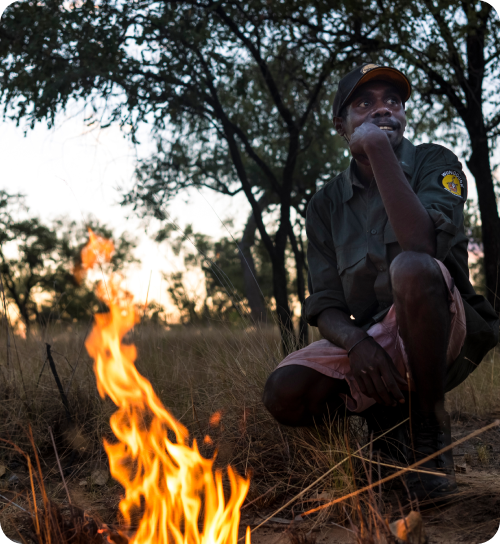
Our carbon projects center on traditional fire management practices that First Nations people have used for tens of thousands of years. These cool, early dry-season burns reduce fuel loads and prevent destructive late-season wildfires, protecting both Country and climate.
Climate & Country Impact
Supporting climate action, biodiversity, and cultural heritage through strategic fire management.

Emissions Reduction
Our early dry season burns release less greenhouse gas than late dry season fires, reducing overall emissions while maintaining ecological balance.

Measurable Climate Results
Over 40% reduction in annual emissions, reduced fire coverage by about one-third, and thousands of ACCUs generated yearly.

Habitat & Species Protection
Fire-sensitive vegetation is maintained, and critical habitats for species like Northern Quoll, Gouldian Finch, and Black Grasswren are safeguarded.
Biodiversity & Connectivity
Varied fire ages create habitat mosaics, strengthen ecosystems, preserve connectivity, and reduce wildlife loss from uncontrolled fires.

Fire Regime Optimisation
Restoring natural fire patterns lowers the risk of catastrophic wildfires and improves landscape resilience to climate variability.

Cultural Site Protection
Ancient rock art, sacred sites, ceremonial grounds, and archaeological areas are shielded from smoke and heat damage.